How long will a power station run a CPAP?
Updated Oct 11, 2026
We may earn a commission when you buy through links on this page. As an Amazon Associate I earn from qualifying purchases.
A CPAP is one of the easier devices to run from a power station, but small stations are smaller than they look. Without the humidifier most machines draw about 30–60 W. With it, about 80–100 W. A compact 250–300 Wh station gives roughly 5–6 hours without the humidifier, which is less than one full night. For two nights without the humidifier you need roughly 750 Wh or more, and about twice that with it.
General information, not medical advice. Power stations are not certified medical backup devices. For life-sustaining equipment such as oxygen concentrators, keep a backup plan, ask your equipment supplier, and register with your utility’s medical-priority program.
Find your machine’s real draw
The number on your CPAP’s power brick is a maximum, not typical use. Real draw depends on your pressure setting, mask leak and humidity. We use 40 W without the humidifier and 90 W with it, which is typical for modern machines. For a precise number, plug the machine into a watt meter for one night and divide the watt-hours by the hours slept.
Runtime without humidifier (40 W)
| Power station | Capacity | Runtime |
|---|---|---|
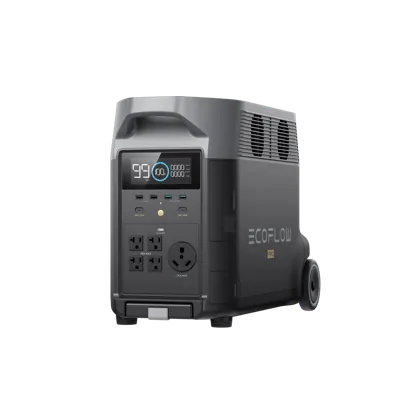 EcoFlow DELTA Pro EcoFlow DELTA Pro | 3,600 Wh | 3.2 days |
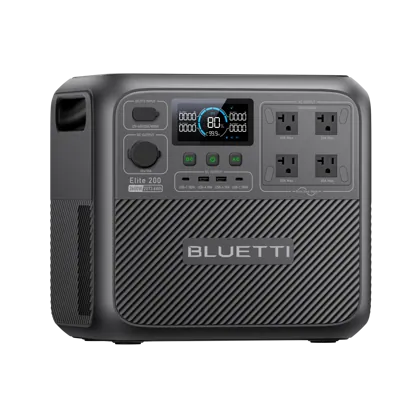 BLUETTI Elite 200 V2 BLUETTI Elite 200 V2 | 2,074 Wh | 44.1 h |
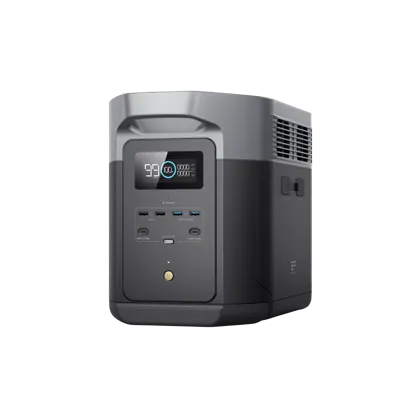 EcoFlow DELTA 2 Max EcoFlow DELTA 2 Max | 2,048 Wh | 43.5 h |
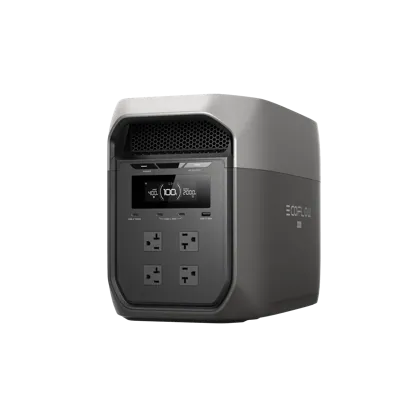 EcoFlow DELTA 3 Max EcoFlow DELTA 3 Max | 2,048 Wh | 43.5 h |
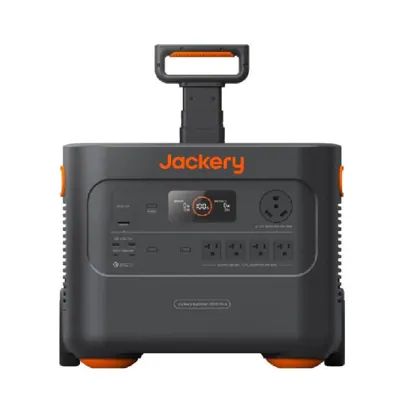 Jackery Explorer 2000 Plus Jackery Explorer 2000 Plus | 2,042 Wh | 43.4 h |
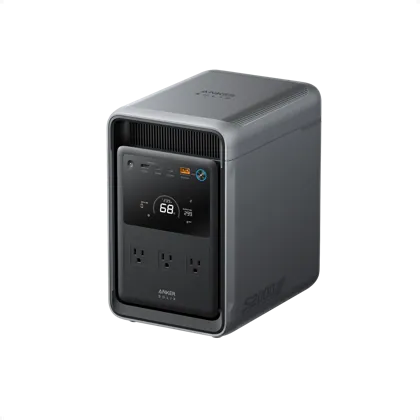 Anker SOLIX S2000 Anker SOLIX S2000 | 2,010 Wh | 42.7 h |
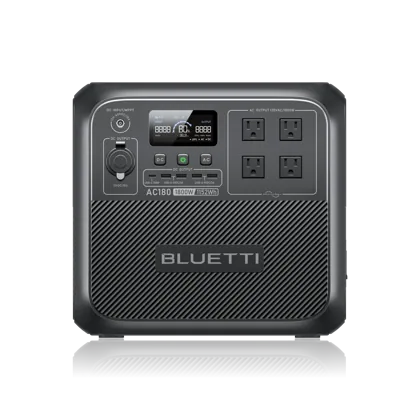 BLUETTI AC180 BLUETTI AC180 | 1,152 Wh | 24.5 h |
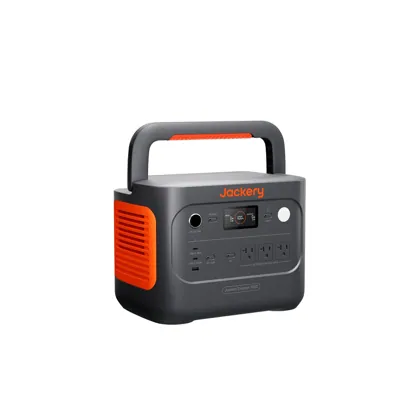 Jackery Explorer 1000 v2 Jackery Explorer 1000 v2 | 1,070 Wh | 22.7 h |
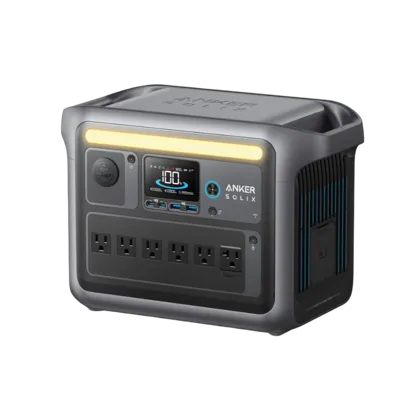 Anker SOLIX C1000 Anker SOLIX C1000 | 1,056 Wh | 22.4 h |
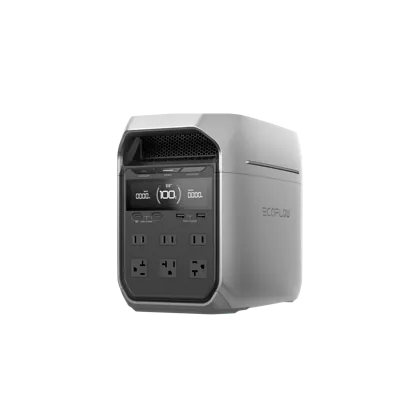 EcoFlow DELTA 3 Plus EcoFlow DELTA 3 Plus | 1,024 Wh | 21.8 h |
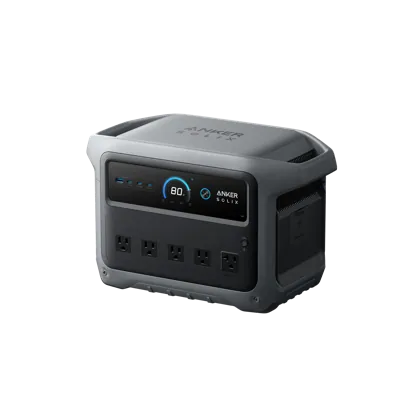 Anker SOLIX C1000 Gen 2 Anker SOLIX C1000 Gen 2 | 1,024 Wh | 21.8 h |
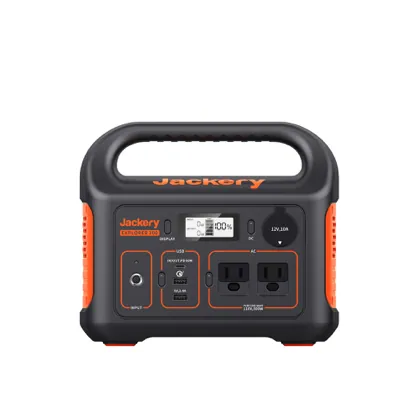 Jackery Explorer 300 Jackery Explorer 300 | 293 Wh | 6.2 h |
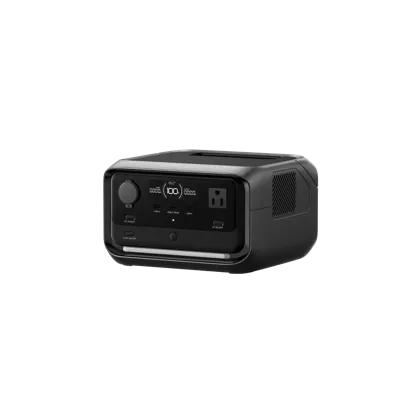 EcoFlow RIVER 3 Plus EcoFlow RIVER 3 Plus | 286 Wh | 6.1 h |
Runtime with humidifier (90 W)
| Power station | Capacity | Runtime |
|---|---|---|
| EcoFlow DELTA Pro | 3,600 Wh | 34.0 h |
| BLUETTI Elite 200 V2 | 2,074 Wh | 19.6 h |
| EcoFlow DELTA 2 Max | 2,048 Wh | 19.3 h |
| EcoFlow DELTA 3 Max | 2,048 Wh | 19.3 h |
| Jackery Explorer 2000 Plus | 2,042 Wh | 19.3 h |
| Anker SOLIX S2000 | 2,010 Wh | 19.0 h |
| BLUETTI AC180 | 1,152 Wh | 10.9 h |
| Jackery Explorer 1000 v2 | 1,070 Wh | 10.1 h |
| Anker SOLIX C1000 | 1,056 Wh | 10.0 h |
| EcoFlow DELTA 3 Plus | 1,024 Wh | 9.7 h |
| Anker SOLIX C1000 Gen 2 | 1,024 Wh | 9.7 h |
| Jackery Explorer 300 | 293 Wh | 2.8 h |
| EcoFlow RIVER 3 Plus | 286 Wh | 2.7 h |
Divide these hours by 8 to get nights of sleep.
Run it from DC to go further
Every power station loses some energy converting battery power to AC. Many CPAP makers sell a 12 V DC adapter that plugs into the station’s car socket and skips that conversion, which typically adds 10–20% more runtime. Check that the adapter is approved for your model, and turn off the heated tube and humidifier when you need the most nights.
UPS mode at home
Some stations can sit between the wall and your machine and switch to battery automatically during an outage. The EcoFlow RIVER 3 Plus and DELTA 3 Plus and the Anker SOLIX C1000 Gen 2 list a switchover of about 10 ms. That is designed to keep most machines running, but test it with your own machine before you rely on it.
Our picks
For travel: the lightest current stations that give at least two nights without the humidifier (about one with it).
Jackery · Mid-size
Explorer 1000 v2
- 1,070Wh
- 1,500W out
- 23.8lb
One of the lightest 1 kWh LiFePO4 stations, with a 4,000-cycle rating. It has fewer AC outlets than rivals.
Anker · Mid-size
SOLIX C1000 Gen 2
- 1,024Wh
- 2,000W out
- 24.9lb
The fastest-charging 1 kWh station here (49 minutes from the wall), with 2,000 W output, 4,000 cycles and a 10 ms UPS, at under 25 lb.
As an Amazon Associate I earn from qualifying purchases.
For home backup: 2 kWh stations that give about two nights even with the humidifier on.
Anker · Large
SOLIX S2000
- 2,010Wh
- 1,500W out
- 35.7lb
Unusually compact and light for a 2 kWh LiFePO4 unit, with a 10 ms UPS. Solar input tops out at 400 W and it can’t take extra batteries.
BLUETTI · Large
Elite 200 V2
- 2,074Wh
- 2,600W out
- 53.4lb
2,600 W output, 6,000-cycle LiFePO4 cells and fast 1,800 W wall charging. Not expandable, and heavy at 53 lb.
As an Amazon Associate I earn from qualifying purchases.
See the full ranking: best power stations for CPAP.