How long will a portable power station run a refrigerator?
Updated Oct 3, 2026
We may earn a commission when you buy through links on this page. As an Amazon Associate I earn from qualifying purchases.
Keeping the fridge cold is the number-one reason people buy a power station for outages. The short answer: a 1,000 Wh station keeps a typical full-size fridge running for about 15–17 hours, and a 2,000 Wh station for well over a day. An efficient newer fridge can run noticeably longer. Whether a station can start the fridge at all is a separate question, and it catches many buyers out.
Two numbers decide it: surge and capacity
Surge (peak) output decides whether the station can start the fridge. When the compressor kicks on it briefly pulls several times its running power, often 800–1,500 W. If that's more than the station's peak rating, the station shuts off. That's why small 300 W units can't run a full-size fridge even when the battery is full.
Capacity (Wh) decides how long it lasts. A fridge doesn't run constantly. The compressor cycles on and off, typically running about a third of the time. A fridge drawing 150 W while running uses roughly 1.2–1.5 kWh a day.
Runtime on every station we cover
Estimates assume a typical full-size fridge (150 W running, 1,200 W startup, ~35% duty cycle) and 85% usable battery capacity.
| Power station | Capacity | Runtime |
|---|---|---|
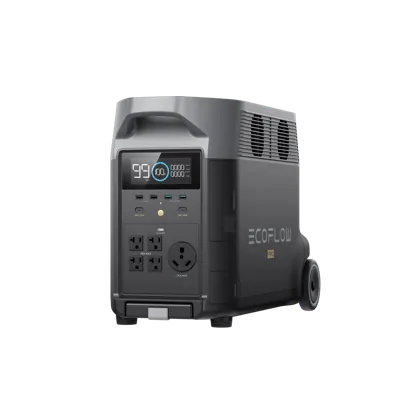 EcoFlow DELTA Pro EcoFlow DELTA Pro | 3,600 Wh | 2.4 days |
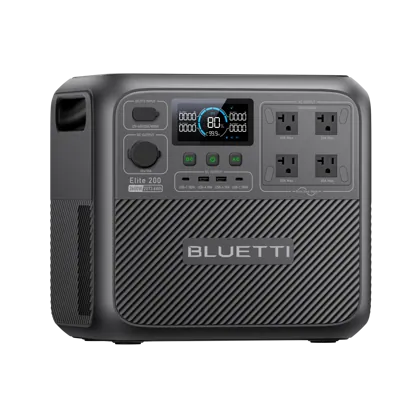 BLUETTI Elite 200 V2 BLUETTI Elite 200 V2 | 2,074 Wh | 33.6 h |
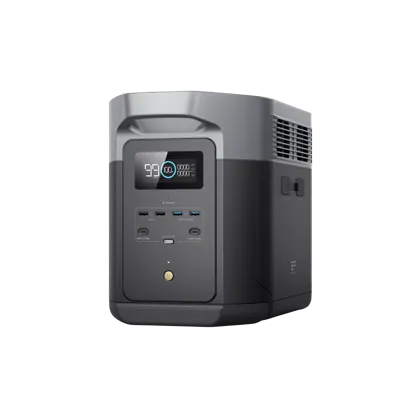 EcoFlow DELTA 2 Max EcoFlow DELTA 2 Max | 2,048 Wh | 33.2 h |
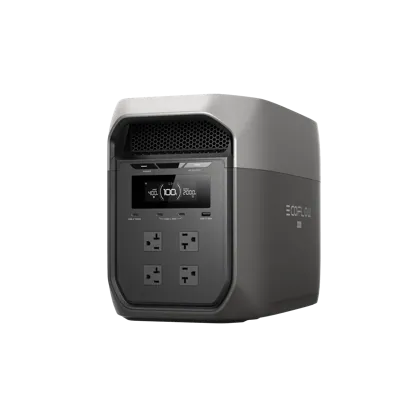 EcoFlow DELTA 3 Max EcoFlow DELTA 3 Max | 2,048 Wh | 33.2 h |
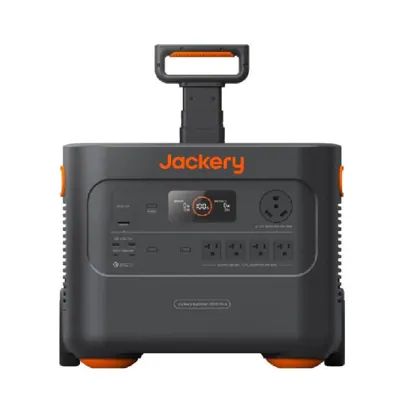 Jackery Explorer 2000 Plus Jackery Explorer 2000 Plus | 2,042 Wh | 33.1 h |
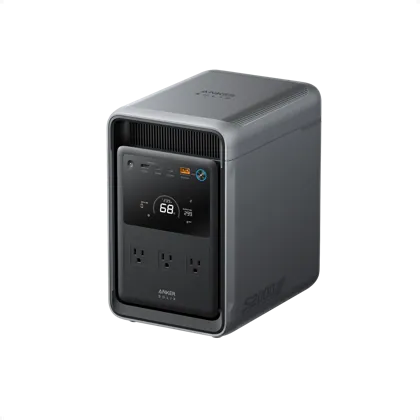 Anker SOLIX S2000 Anker SOLIX S2000 | 2,010 Wh | 32.5 h |
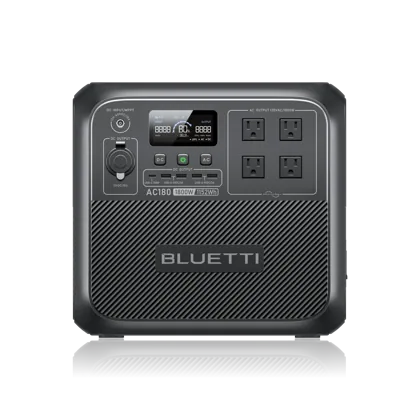 BLUETTI AC180 BLUETTI AC180 | 1,152 Wh | 18.7 h |
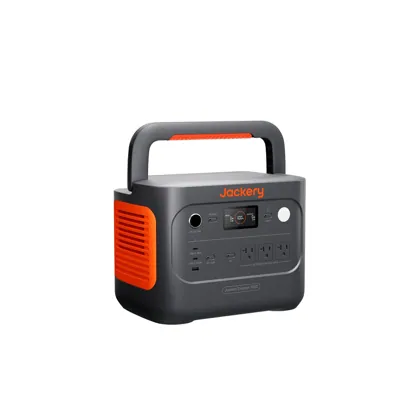 Jackery Explorer 1000 v2 Jackery Explorer 1000 v2 | 1,070 Wh | 17.3 h |
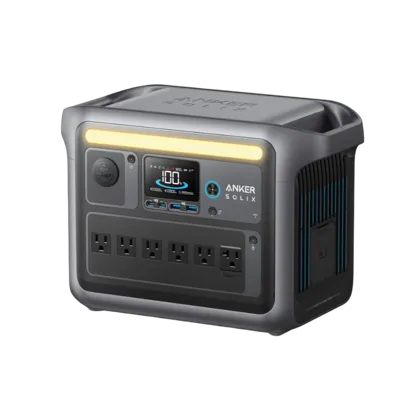 Anker SOLIX C1000 Anker SOLIX C1000 | 1,056 Wh | 17.1 h |
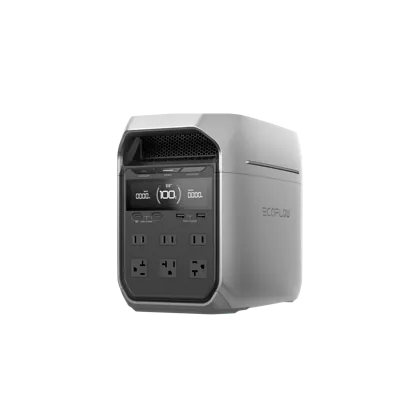 EcoFlow DELTA 3 Plus EcoFlow DELTA 3 Plus | 1,024 Wh | 16.6 h |
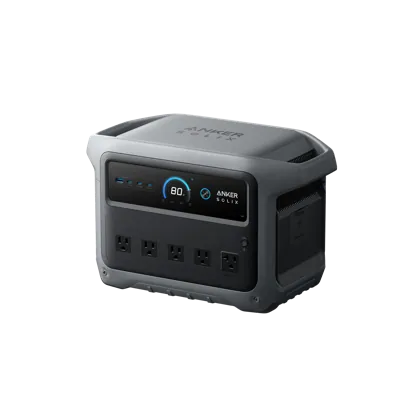 Anker SOLIX C1000 Gen 2 Anker SOLIX C1000 Gen 2 | 1,024 Wh | 16.6 h |
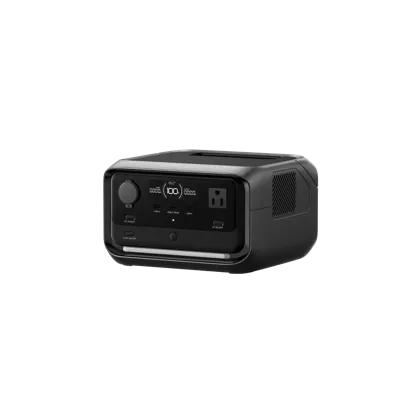 EcoFlow RIVER 3 Plus EcoFlow RIVER 3 Plus | 286 Wh | Borderline |
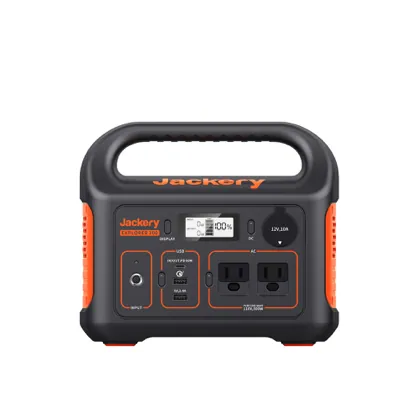 Jackery Explorer 300 Jackery Explorer 300 | 293 Wh | Can’t run it |
Mini fridges and freezers
A mini fridge has a smaller compressor and a lower startup surge, so compact stations with 600 W or more can often run one:
| Power station | Capacity | Runtime |
|---|---|---|
| EcoFlow DELTA Pro | 3,600 Wh | 4.0 days |
| BLUETTI Elite 200 V2 | 2,074 Wh | 2.3 days |
| EcoFlow DELTA 2 Max | 2,048 Wh | 2.3 days |
| EcoFlow DELTA 3 Max | 2,048 Wh | 2.3 days |
| Jackery Explorer 2000 Plus | 2,042 Wh | 2.3 days |
| Anker SOLIX S2000 | 2,010 Wh | 2.2 days |
| BLUETTI AC180 | 1,152 Wh | 30.6 h |
| Jackery Explorer 1000 v2 | 1,070 Wh | 28.4 h |
| Anker SOLIX C1000 | 1,056 Wh | 28.1 h |
| EcoFlow DELTA 3 Plus | 1,024 Wh | 27.2 h |
| Anker SOLIX C1000 Gen 2 | 1,024 Wh | 27.2 h |
| Jackery Explorer 300 | 293 Wh | 7.8 h |
| EcoFlow RIVER 3 Plus | 286 Wh | 7.6 h |
How to make the battery last longer
- Keep the door shut. A closed fridge stays cold for hours without power, so the compressor runs less.
- Check your fridge's real draw. The energy guide label lists kWh per year; divide by 365 for a daily figure. Many newer fridges use under 1 kWh a day.
- Add solar. A few hundred watts of panels can replace much of a day's use in good sun. See our solar charging guide.
- Plug it in directly. Use a heavy-gauge extension cord if you need one, not a long thin cord.
Our picks for running a fridge
Anker · Mid-size
SOLIX C1000 Gen 2
- 1,024Wh
- 2,000W out
- 24.9lb
The fastest-charging 1 kWh station here (49 minutes from the wall), with 2,000 W output, 4,000 cycles and a 10 ms UPS, at under 25 lb.
EcoFlow · Mid-size
DELTA 3 Plus
- 1,024Wh
- 1,800W out
- 27.6lb
The DELTA 2’s successor: same 1 kWh size, but 4,000 cycles, double the solar input (1,000 W), 140 W USB-C and expansion to 5 kWh.
EcoFlow · Large
DELTA 3 Max
- 2,048Wh
- 2,400W out
- 44.8lb
2 kWh and 2,400 W in a lighter body than the DELTA 2 Max (44.8 lb), with 0–80% wall charging in about 68 minutes. It isn’t expandable; the Max Plus version is.
As an Amazon Associate I earn from qualifying purchases.