Solar generator vs portable power station: what’s the difference?
Updated Oct 11, 2026
We may earn a commission when you buy through links on this page. As an Amazon Associate I earn from qualifying purchases.
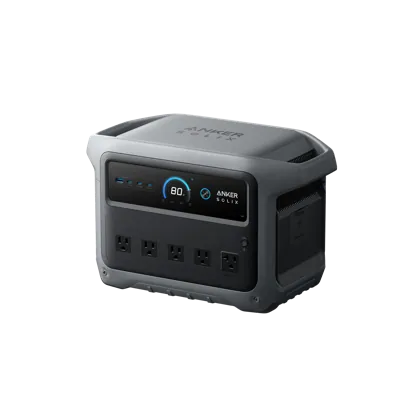
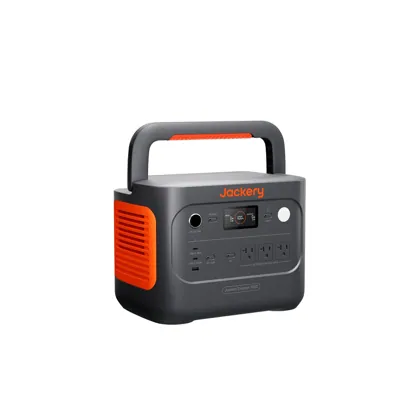
Shop for backup power and you’ll see two names for what looks like the same box: “portable power station” and “solar generator”. The short answer is that a solar generator is a portable power station that you charge with solar panels, usually sold together as a bundle. There’s no engine and no fuel. The battery, inverter and outlets are identical.
Where the name comes from
A gas generator makes electricity by burning fuel. A power station only stores electricity, so on its own it isn’t a generator at all. Add solar panels and the system can produce new energy every sunny day, which is why brands call the bundle a “solar generator”. EcoFlow, Jackery, BLUETTI and Anker all sell the same station either alone or as a “solar generator” kit with one or more panels.
Is the bundle worth it?
- Buy the bundle if you’ll camp off-grid, live in an RV or van, or want to ride out multi-day outages. Bundles are often cheaper than buying the panel separately, and the connectors are guaranteed to match.
- Buy the station alone if you mostly charge from the wall or car, or want to choose different panels later. Most stations accept third-party panels with an adapter cable.
What to check before you buy
- Max solar input (W). This sets how fast the sun can refill the battery. A 1,000 Wh station with 200 W of input needs about 7 hours of good sun to fill; with 1,000 W of input, under 2. See refill times for every model in our solar charging guide.
- Panel wattage vs real output. Panels rarely deliver their rated watts. Plan on 60–80% in real conditions, and about 4–6 hours of useful sun a day in summer.
- Voltage range and connectors. Panels wired in series add voltage, so the total must stay inside the station’s solar input range. Same-brand panels are plug-and-play.
- Battery chemistry. If you’ll charge and drain the battery daily, choose LiFePO4 cells rated for thousands of cycles. Our LiFePO4 vs NMC guide explains why.
Solar generator vs gas generator
A solar generator is silent, safe to use indoors and needs almost no maintenance, but its output and runtime are limited by the battery and the weather. A gas generator runs as long as you have fuel and handles heavy loads more cheaply, but it’s loud and must never run indoors. Read the full comparison in power station vs gas generator.
Stations with the most solar input
If you’re buying a station to pair with panels, these current models accept the most solar power for their size.
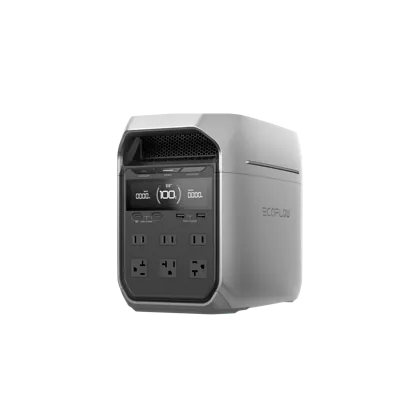
EcoFlow · Mid-size
DELTA 3 Plus
- 1,024Wh
- 1,800W out
- 27.6lb
The DELTA 2’s successor: same 1 kWh size, but 4,000 cycles, double the solar input (1,000 W), 140 W USB-C and expansion to 5 kWh.
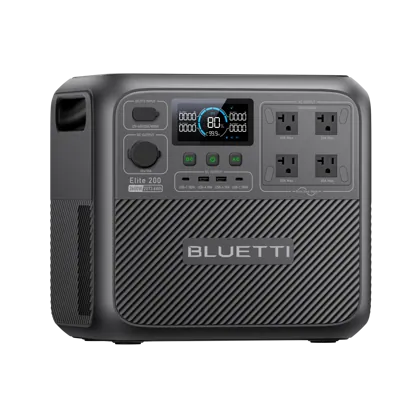
BLUETTI · Large
Elite 200 V2
- 2,074Wh
- 2,600W out
- 53.4lb
2,600 W output, 6,000-cycle LiFePO4 cells and fast 1,800 W wall charging. Not expandable, and heavy at 53 lb.
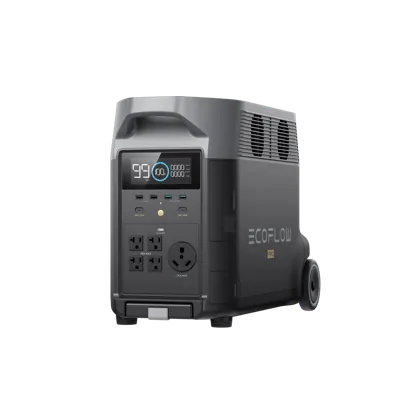
EcoFlow · Whole-home
DELTA Pro
- 3,600Wh
- 3,600W out
- 99lb
A wheeled 3.6 kWh home-backup system with 3,600 W output that can expand far beyond its base capacity. Heavy at 99 lb.
As an Amazon Associate I earn from qualifying purchases.
For a full ranking, see best power stations for RVs and van life, which ranks stations by solar input.